| My dreams of
flight started very early in life. As a child, I built
models and dreamed of someday flying my own plane. As a
teenager, I hung around the local airport so much that the
folks there finally gave me a job pumping gas. I spent
many days, sunup to sunset, surrounded by planes and trading
work hours for flying lessons. The year was 1973.
Unfortunately, I was unable to complete my training before
changes in my life pushed me in another direction. It
would be decades before I could get back to flying.
A score and some odd years
later, I found myself living and working in Northern
California. My home was only a few miles from the local
airport and again, I found myself hanging out, watching the
planes. In all the years since those early days I had
never lost my interest. I still read the magazines, and
had even gotten into building and flying
remote controlled models.
All the pieces seem to fall
in place and it felt that if I didn't learn to fly now, I may
never get it done. The thought of growing old and
looking back with regret that I never gave it a try was too
much. The decision was made and it was off to the races.
I found a local instructor
and got busy. I endured many setbacks including having
my flight school go out of business, losing my instructor,
having to buy half ownership into a Cessna 150 and finally
finishing up my training with another Certified
Flight Instructor (CFI). The process took several
years, but I finally passed my check ride and became a private
pilot in February of 1999.
I built my hours up flying my
1966 Cessna 150 but it was obvious that something with a
little more payload and utility was needed. I wanted
something that could carry me, my wife, and all the luggage we
wanted along with full fuel and not have to worry about over
loading the plane or wondering if it would get off the ground
on a warm day. Oh, and by the way, not cost a fortune to
own and operate.
I happen to have a very
analytic personality and spent much time comparing many
factors for lots of aircraft. At the end of the day, the
one aircraft that met my requirements was the Piper PA-22
Tri-Pacer. What's a Tri-Pacer, you ask? The
Tri-Pacer is a high wing, tube and fabric, four seat, single
engine airplane that is as basic and simple to operate as it
gets.
Between 1951 and 1963, Piper
built close to ten thousand PA-22 model aircraft in their
factory at Lock Haven, Pennsylvania. These aircraft saw
many incremental changes and were called many names but the
basic aircraft stayed pretty much the same. Whether they
were called Tri-Pacer, Caribbean or Colt, these aircraft made
real the dream of flight and taught generations of people to
fly.
Since Tri-Pacers had not
been made for close to forty years, I wanted to find an
example that had been recently restored so that it would
provide me with years of service before any major work would
be required. Sources such as Trade-A-Plane,
the Internet and the
Short
Wing Piper Club were used for the search. I traveled
all around the country looking at aircraft, but everything I
saw fell short of my standards.
Finally, in the fall of 1999,
my wife and I combined a vacation touring the New England
states with stops to examine three Tri-Pacers located in New
Hampshire and Pennsylvania. One of the three aircraft, a
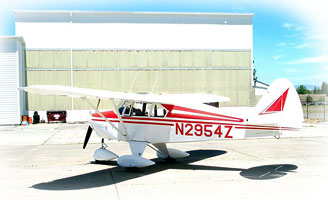
1959 PA-22-160, stood out from all the others that I had seen
and my search was over.
I've had 2954Z for over
twenty years and have been priviliged to care for and
cherish this amazing aircraft. 2020 has been a difficult
year for more reasons than I can say but for me, the most
heartbreaking was my decision to sell my beloved 54Z.
Costs kept rising and my access to a resonably priced hanger
in central Oregon had disappeared.
An ad on Barnstormers.com
brought me a flood of offers and within weeks of posting, 54Z
was on it's way to a new home. I can only hope that the
new owner will appreciate and care for 54Z as I did.
The Tri-Pacer is not the
newest design on the field and has the kind of looks people
either love or hate. It has been called the "Flying Milk
Stool", "Slow Pacer", and other names but for capability,
usefulness and overall economy, it would be hard to beat.
|